.webp)


-855085.jpg)
One Family’s Fight Against Drought and Wild Elephants



.png )
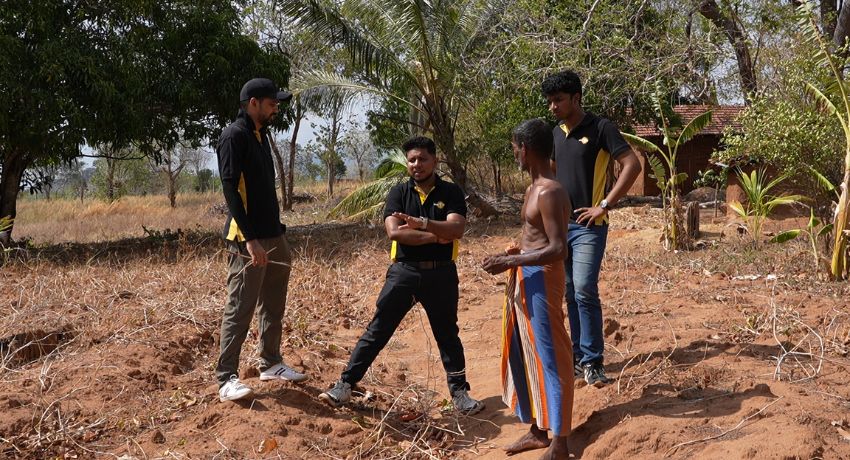
(News 1st's Amila Munasinghe, Jason Navaratne and Lavaniyan Jeevanandam along with camera operator Mahinda Gamage visited Moneragala to file this report)
COLOMBO (News 1st); For Weerasinghe, every day now begins with the same struggle: finding water.
The farmer from Kalugammulla in Monaragala has spent decades working the land, but today he finds himself fighting a battle unlike any he has faced before. The wells are drying up, crops have withered away, and even the simple act of finding drinking water has become a challenge.
"There is no water. We spend our days searching for water. I've lived here my whole life and I've never seen a drought this severe. But what can we do? We have to somehow carry on," he said.
His wife, Shanthi Menike, fears the situation could worsen.
"If this dry weather continues, it will become impossible to live here," she said.
The couple lives in Kalugammulla with their only daughter.
For more than 25 years, farming has been their livelihood.
But today, the land that once sustained them has all but given up.
"I've been farming for 25 to 30 years. At the moment there's nothing left. Everything has died. We planted expecting rain, but the rain never came," Weerasinghe lamented.
As El Niño-driven dry weather conditions continue to affect eight districts across Sri Lanka, Monaragala remains the hardest-hit district, with more than 42,000 people impacted.
Residents say they have never experienced such conditions in decades.
"Usually, by this time of year, we would have received rain. Even during previous dry periods, it was never this severe. This is the worst drought we've seen in nearly 30 years. Even inside the house, the heat is unbearable. If this continues, we won't even have drinking water left," Shanthi Menike said.
Finding water for daily use has now become one of the biggest challenges facing the family.
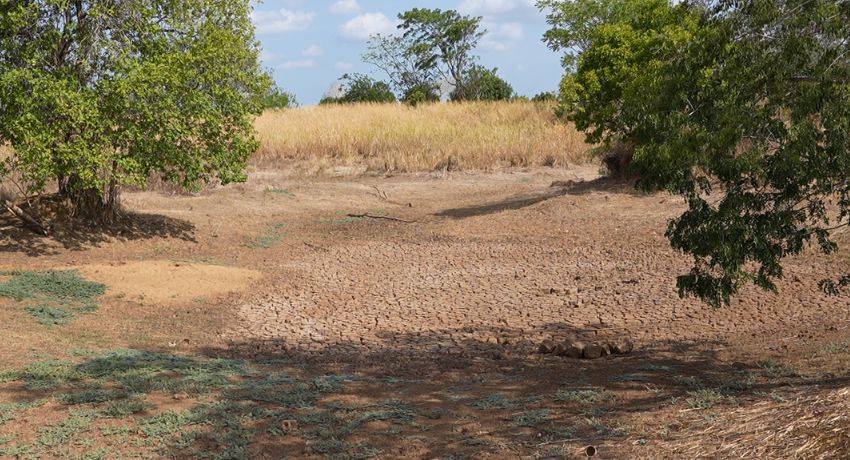
The reservoir closest to their home has completely dried up.
Across Monaragala District, nearly 487 of the approximately 800 tanks have been reduced to a similar state, while water levels in several major reservoirs have fallen to less than 30 percent of capacity.
Standing in the middle of his ruined field, Weerasinghe's disappointment is evident.
Just months ago, he planted two acres of cowpea with hopes of earning enough to support his family. Today, the entire cultivation has been destroyed by the drought.
Land that would normally be covered with thriving corn or cowpea crops has instead turned into a barren, cracked landscape under the relentless sun.
The situation has become so severe that authorities are carefully rationing available water supplies as water levels in key sources including the Jilone and Kumbukkan Oya continue to decline.
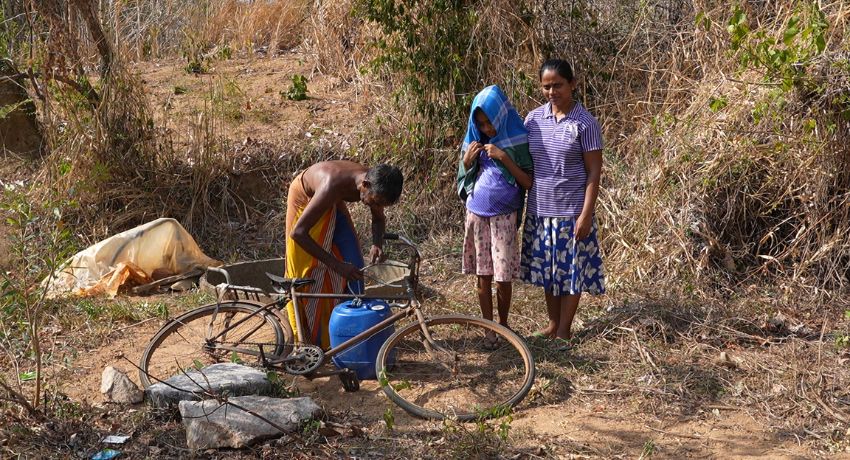
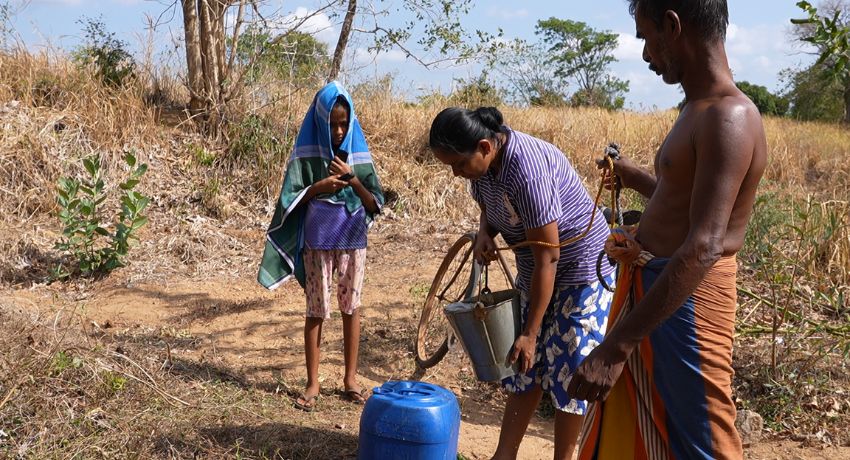
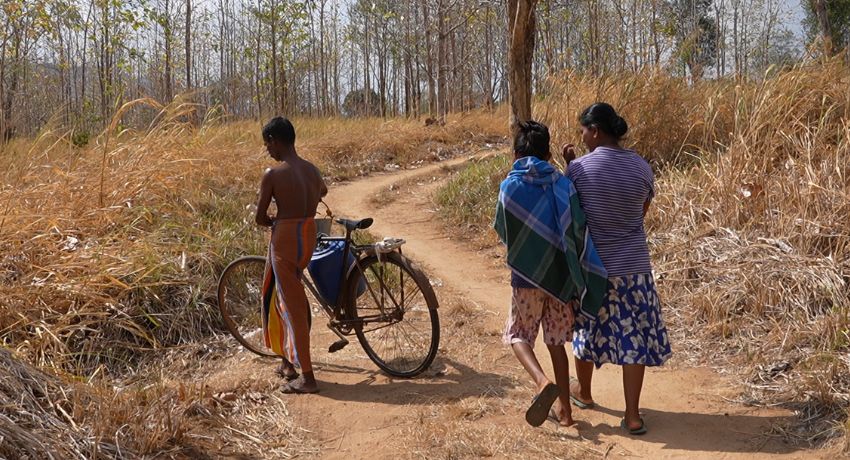
For many families, travelling several kilometres in search of water has become part of their daily routine.
"We take the bicycle, cross the road with our water cans and fetch drinking water. Every evening we collect enough water just to wash. There isn't enough water in the wells to even bathe properly anymore. Everything is drying up," Shanthi Menike explained.
The drought is not only affecting people.
Wildlife is also struggling to survive.
With food and water becoming increasingly scarce in the forests, elephants are venturing into villages more frequently.
Several houses in Kalugammulla, including homes near Weerasinghe's residence, have been damaged by wild elephants in recent days.
The threat has forced the family to adopt extraordinary measures.
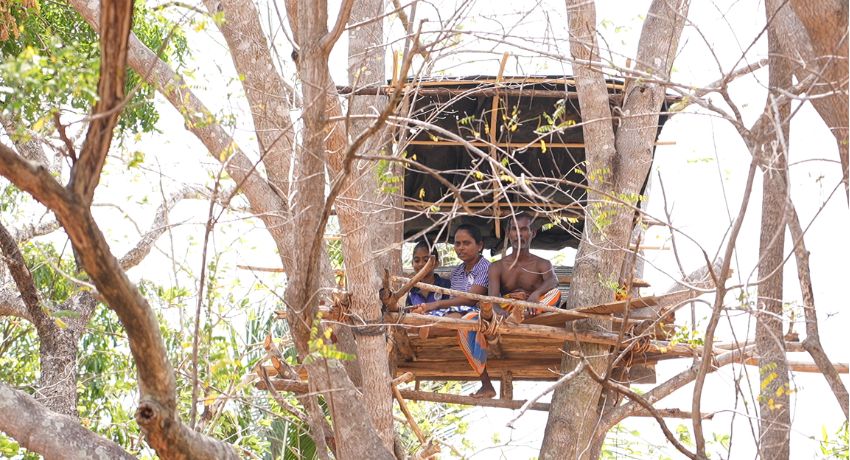
Every night, Weerasinghe spends the hours of darkness perched on a tree with his wife and child nearby, keeping watch for elephant intrusions.
"Elephants came again last night. We're scared. We have dinner early, around five in the evening, take the child and sit up there with flashlights, watching and waiting," he said.
His wife says the family's nights end only when daylight arrives.
"We climb down around four in the morning. If it's a school day, I have to prepare food for our daughter. But whenever we hear branches breaking, we get frightened. There's nothing else we can do. As long as he's outside keeping watch, I cook," she explained.
Despite the hardships, Weerasinghe refuses to give up.
The scorching sun, failed harvests and sleepless nights have tested his resolve, but not broken it.
Like thousands of farmers across the drought-stricken region, he continues to look skyward, waiting for the rain that could bring life back to his land.
"All we're waiting for now is rain. Once it comes, we'll start farming again. We'll plant maize, cashew and other crops. Then we'll be able to survive," he said.
For families like Weerasinghe's, hope has not disappeared. It simply lies dormant, waiting for the first drops of rain.
Other Articles


 1-855036_550x300.jpg)



.png)


Featured News




News 1st, MTV Channel (Pvt) Ltd, MBC Networks (Pvt) Ltd, 45/3, Braybrooke Street, Colombo-02.
T.P : +94 114 792 700, Fax : +94 114 792 733
T.P : +94 114 792 700, Fax : +94 114 792 733




 |  | .webp) |
|---|---|---|
 |  |  |
 |  |  |
 |
