.webp)


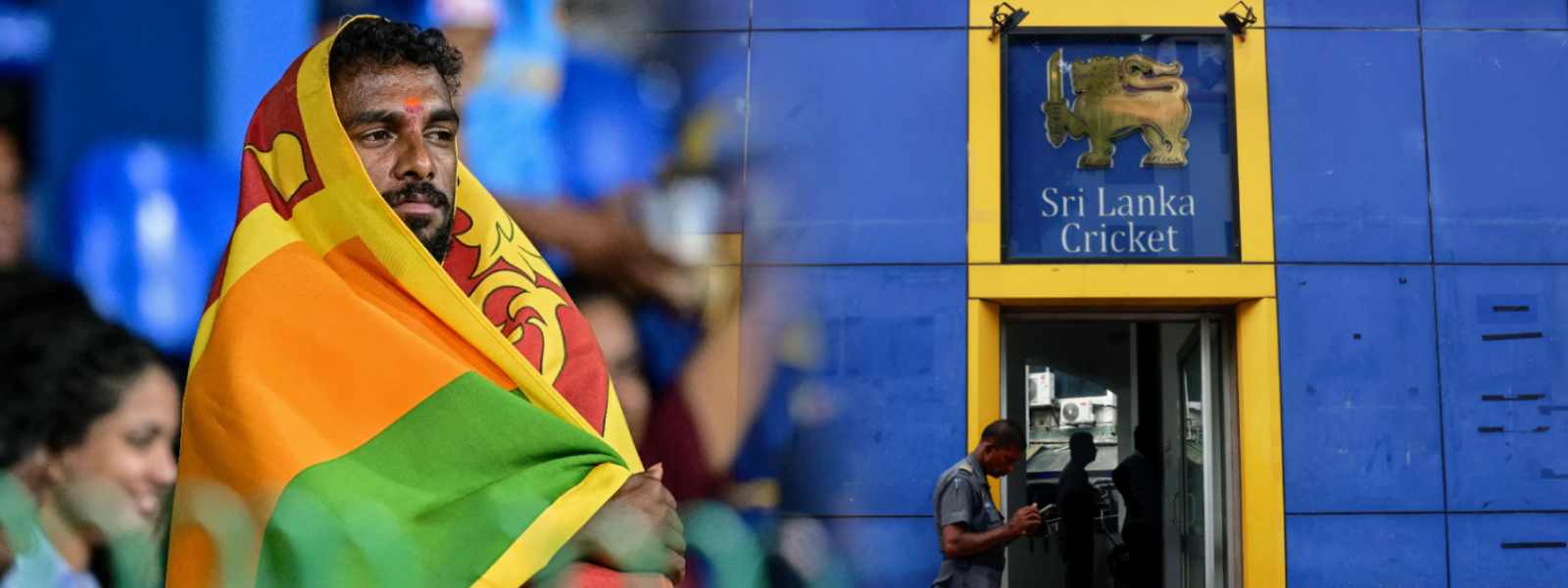
The sad decline of Sri Lanka Cricket : Failing Results, Fresh Resignations, and Mounting Pressure on the Board



.png )
The sad decline of Sri Lanka Cricket : Failing Results, Fresh Resignations, and Mounting Pressure on the Board Sri Lanka Cricket is again under intense public scrutiny, with the national game mired in poor results, administrative instability and renewed calls for accountability at the very top. What was once one of Sri Lanka’s proudest sporting institutions is now increasingly seen as a symbol of drift: a board facing repeated questions, a team trapped in recurring failure, and a public running out of patience.
The crisis is no longer confined to match results alone. It now spans governance, coaching upheaval, public protests and growing demands for Sri Lanka Cricket Chairman Shammi Silva to step down. Those demands intensified after Sri Lanka’s latest T20 World Cup failure, with public protests outside SLC headquarters and repeated calls for the board leadership to resign.
A proud cricket nation, trapped in repeated decline
Sri Lanka’s struggles on the field have become too serious, and too frequent, to dismiss as a temporary slump. At the 2023 ODI World Cup, Sri Lanka finished ninth out of ten teams, losing seven of nine matches. That finish also meant Sri Lanka failed to qualify for the 2025 Champions Trophy. In the 2024 T20 World Cup, Sri Lanka were eliminated in the first round.
For a country with Sri Lanka’s cricketing history, those are not minor disappointments. They form a pattern. Tournament after tournament, Sri Lanka have struggled to compete consistently at the level expected of a former world champion and a once-feared force in world cricket.
The revolving door around the national setup
The instability has not been limited to players or performances. Coaching and high-performance structures have also been in visible churn.
In June 2024, Mahela Jayawardene resigned as consultant coach following Sri Lanka’s disappointing T20 World Cup campaign, and head coach Chris Silverwood also resigned, with Sri Lanka Cricket saying he stepped down for personal reasons.
Now another resignation has added to the sense of disorder. Avishka Gunawardena resigned after being moved from his role as Sri Lanka ‘A’ head coach into the Under-19 setup, according to multiple recent local reports. Those reports said the resignation followed a wider reshuffle within Sri Lanka Cricket’s High Performance structure.
Taken together, the departures paint a picture of a system that has struggled to project continuity, stability or confidence.
Governance questions refuse to go away
The deeper problem for Sri Lanka Cricket is that public frustration is not driven only by defeats. It is driven by the belief that the sport’s administrative culture has become deeply troubled.
In November 2023, the ICC suspended Sri Lanka Cricket over government interference. The ICC later lifted that suspension in January 2024, but the episode remains one of the most damaging blows to the credibility of the institution in recent times. That episode fed a larger public debate already fuelled by parliamentary scrutiny, audit concerns and repeated allegations around the governance of the game. For critics, the issue is no longer only who loses matches. It is who runs the sport, how they run it, and whether the system can still command public trust.
Public anger now has a face: calls for Shammi Silva to resign
As Sri Lanka’s cricketing failures have mounted, public criticism has become more direct. In recent weeks, protests and public demands have explicitly called for SLC President Shammi Silva to step down. Daily Mirror reported both organised protests outside SLC headquarters and rising calls for Silva’s resignation following Sri Lanka’s elimination.
This is politically important. Criticism of cricket boards is common in South Asia. But when public discontent becomes sustained and personalised around the board president, it signals something deeper than ordinary post-defeat anger. It signals a crisis of legitimacy.
The larger charge: not just losing, but losing trust
A national team can survive defeat. What is much harder to survive is the impression that failure has become normal, accountability has become selective, and reform has become cosmetic. That is the central issue now confronting Sri Lanka Cricket. The damage is not only on the scoreboard. It is in the erosion of trust.
Where this story now stands
Sri Lanka Cricket today finds itself at the centre of two overlapping crises: declining results and deepening public mistrust. The recent resignation of Avishka Gunawardena, the earlier exits of senior coaching figures, the team’s repeated failures at major tournaments, the ICC suspension episode, and the latest public calls for Shammi Silva to step down have together created a picture of a game in visible distress.
For many Sri Lankans, the question is no longer whether the system is under pressure. It clearly is. The question now is whether those in charge recognise the scale of the collapse in public confidence — and whether meaningful accountability will follow before yet another chapter of decline is written into the history of Sri Lankan cricket.
Other Articles





Featured News



News 1st, MTV Channel (Pvt) Ltd, MBC Networks (Pvt) Ltd, 45/3, Braybrooke Street, Colombo-02.
T.P : +94 114 792 700, Fax : +94 114 792 733
T.P : +94 114 792 700, Fax : +94 114 792 733




 |  | .webp) |
|---|---|---|
 |  |  |
 |  |  |
 |
