.webp)


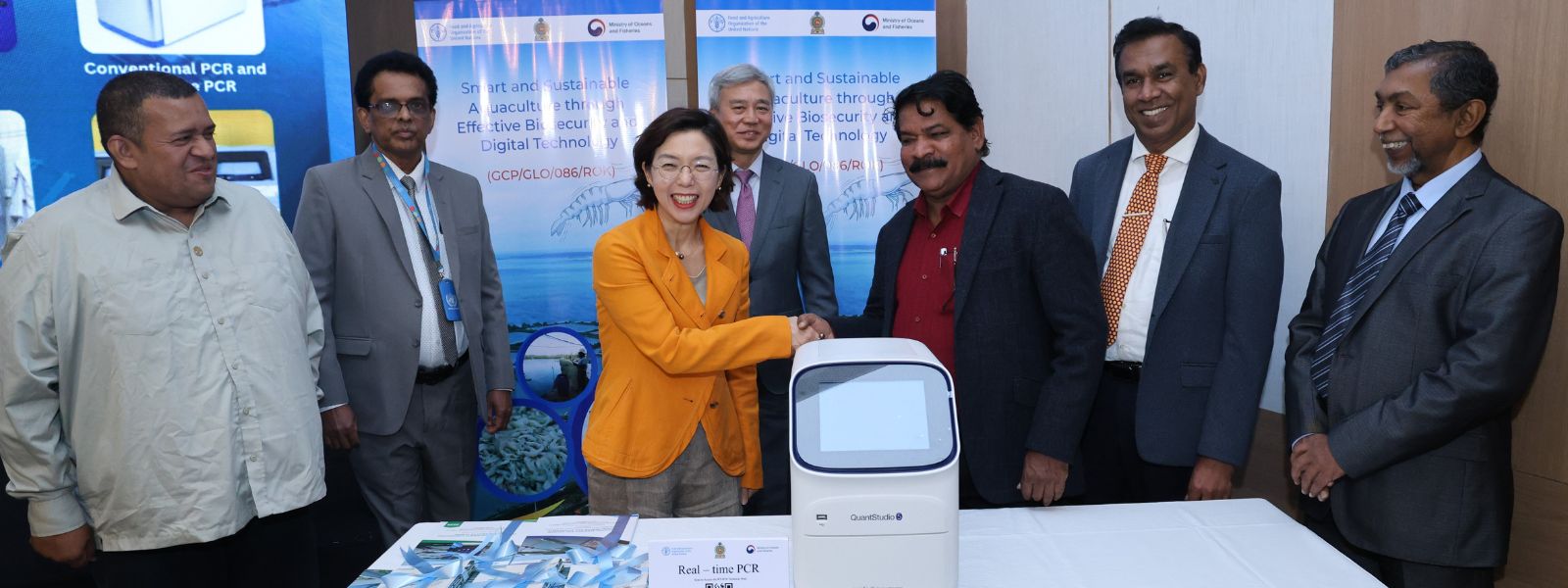
Sri Lanka Elevates Shrimp Aquaculture with High-Tech, Biosecure Overhaul



.png )
COLOMBO (News 1st); Sri Lanka has advanced efforts to modernise its shrimp aquaculture sector following the completion of a four-year initiative aimed at strengthening sustainability, technology adoption and disease management across the industry.
The project, titled “Smart and Sustainable Aquaculture through Effective Biosecurity and Digital Technology,” was implemented by the Food and Agriculture Organization of the United Nations (FAO) in collaboration with the Ministry of Fisheries, Aquatic and Ocean Resources. Financial support was provided by the Government of the Republic of Korea.
Over its duration, the initiative reinforced national biosecurity systems, introduced digital solutions, improved food safety mechanisms and expanded technical expertise throughout Sri Lanka’s shrimp value chain.
Among its most significant outcomes is the development of the National Strategy on Aquatic Animal Health, which establishes a comprehensive framework for improving disease prevention and management in aquaculture. The strategy is supported by a national aquatic pathogen list, disease profiles covering major shrimp illnesses and findings from a nationwide survey of 699 shrimp farms.
The project also enabled GIS-based mapping and profiling of farms, allowing for more precise disease surveillance, environmental monitoring and strategic planning. Laboratory capacity in aquatic animal health was upgraded, including improvements to National Aquaculture Development Authority (NAQDA) facilities and greater access to modern diagnostic technologies.
A notable feature of the project is the introduction of the National Shrimp Industry Information System (SIIS), a digital platform designed to integrate farm-level and national data for real-time monitoring and decision-making. The system uses IoT-enabled sensors to capture water quality indicators and generate early warning alerts, allowing both farmers and authorities to respond quickly to emerging risks. As part of this rollout, all shrimp farms in the Northwestern Province have been mapped under the SIIS platform, supporting a shift toward a more responsive and data-driven aquaculture sector.
The initiative also reviewed and updated Better Management Practices (BMP) for shrimp farming, placing emphasis on stronger environmental sustainability and enhanced biosecurity. These updated guidelines have been widely shared among farmers and other stakeholders through targeted awareness and training programmes.
Ambassador of the Republic of Korea to Sri Lanka, Miyon Lee, reaffirmed Korea’s role as a development partner and commended FAO’s efforts in promoting sustainable aquaculture.
The Ambassador noted that continued support would assist Sri Lanka in transitioning to more efficient aquaculture systems through the adoption of digital technologies, while contributing to rural livelihoods and food security.
In addition, the project evaluated Sri Lanka’s shrimp food safety systems and introduced a strategic improvement plan targeting regulatory frameworks, laboratory capabilities and compliance with international standards. These measures are expected to strengthen market access and improve consumer confidence. Training and capacity development formed a central component of the programme. A total of 450 shrimp farmers and 190 government officials received training in key areas including disease diagnostics, water quality monitoring, biosecurity practices and digital data management.
To support these developments, equipment valued at approximately USD 128,000 was provided, including water quality monitoring tools, laboratory diagnostic equipment and IT infrastructure aimed at strengthening both field and laboratory operations.
The outcomes of the project collectively contribute to strengthening Sri Lanka’s shrimp aquaculture sector through improved governance, science-based decision-making and the integration of digital innovation.
Continued collaboration between FAO, the Government of Sri Lanka and development partners will be critical to sustaining progress and supporting long-term growth, improved livelihoods and enhanced food security.
Other Articles




Featured News

-835300_550x300.jpg)


News 1st, MTV Channel (Pvt) Ltd, MBC Networks (Pvt) Ltd, 45/3, Braybrooke Street, Colombo-02.
T.P : +94 114 792 700, Fax : +94 114 792 733
T.P : +94 114 792 700, Fax : +94 114 792 733




 |  | .webp) |
|---|---|---|
 |  |  |
 |  |  |
 |
